
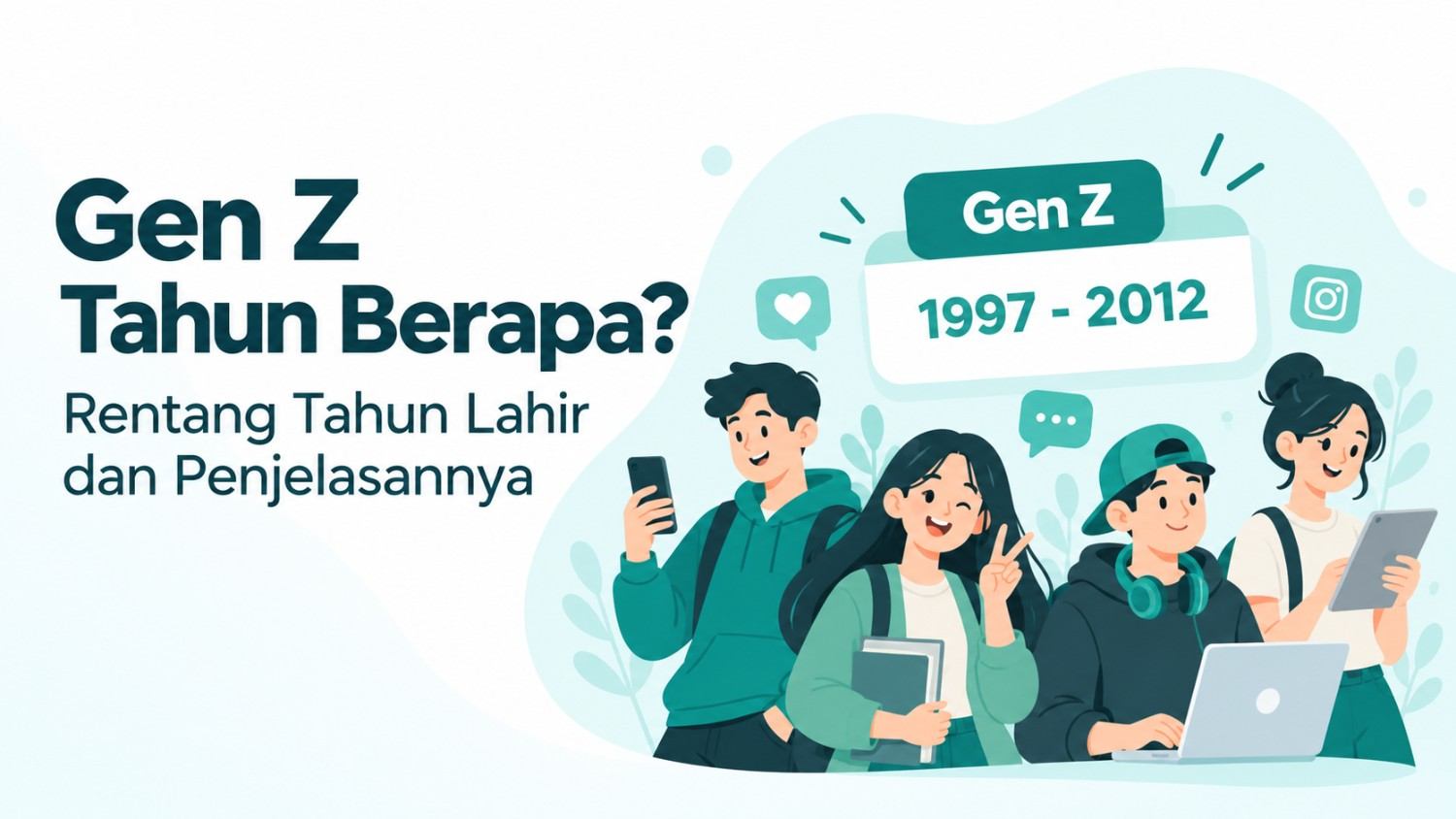
The term Gen Z or Generation Z is often used to refer to the generation group born after millennials. However, many people still ask: What year is Gen Z? Generally, Gen Z refers to people born between the late 1990s and the early 2010s. One of the most commonly used ranges is 1997 to 2012.
However, the birth year boundaries for Gen Z vary across sources. Some studies or institutions may use slightly different year ranges. In this article, we'll discuss the birth year range for Gen Z, their current age, the general characteristics of this generation, and how they differ from Millennials and Gen Alpha.
What Year is Gen Z?
Gen Z is generally the generation born around 1997 to 2012. With this span, Gen Z is after the Millennial Generation and before Generation Alpha.
Simply:
- Millennials: circa 1981–1996
- Gen Z: circa 1997–2012
- Gen Alpha: started around the 2010s or early 2010s, depending on the source
It's important to understand that generational divisions aren't universally accepted rules. Year ranges can vary depending on the research, institution, or context.
Why is Gen Z's lifespan so different?
There is no single global standard that defines when a generation begins and ends. Generational divisions are usually based on several factors, such as:
- Technological changes
- Social conditions
- Major world events
- Education pattern
- Cultural change
- How people communicate
Therefore, some sources may start Gen Z in 1995, while others use 1997 or another year. For general use, the 1997–2012 range is the most widely used.
How Old Is Gen Z Now?
If we use the birth range of 1997 to 2012, then in 2026 the age of Gen Z will be approximately between:
- Born 1997: around 28–29 years old
- Born 2000: around 25–26 years old
- Born 2005: around 20–21 years old
- Born 2010: around 15–16 years old
- Born 2012: around 13–14 years old
A person's exact age depends on whether their birthday for that year has passed or not. To find your exact age based on your birth date, you can use an online age calculator and enter your full birth date.
Gen Z Birth Year and Estimated Age Table
Here's an example of Gen Z's estimated age in 2026:
| Year of Birth | Estimated Age in 2026 |
| 1997 | 28–29 years old |
| 1998 | 27–28 years old |
| 1999 | 26–27 years old |
| 2000 | 25–26 years old |
| 2001 | 24–25 years |
| 2002 | 23–24 years old |
| 2003 | 22–23 years old |
| 2004 | 21–22 years old |
| 2005 | 20–21 years |
| 2006 | 19–20 years |
| 2007 | 18–19 years |
| 2008 | 17–18 years |
| 2009 | 16–17 years |
| 2010 | 15–16 years |
| 2011 | 14–15 years |
| 2012 | 13–14 years |
The two-digit range is used because a person's age changes after their birthday. To understand how age is calculated based on their birth date,
What is Generation Z?
Generation Z is a generation group that grew up in a time when the internet, smartphones, social media, and digital technology were developing very rapidly.
Unlike previous generations who experienced the transition to the digital world, most of Gen Z has been familiar with technology from a young age.
Because of this, Gen Z is often considered as one of the generations that is very close to digital life.
However, not all members of Gen Z have the same experiences. Factors such as country, family environment, education, and economic conditions still significantly influence a person's life.
Why is it called Gen Z?
The name “Gen Z” emerged after the terms Generation X and Generation Y. Generation Y was later known as Millennials, while the next generation was called Generation Z.
The sequence is simply:
- Generation X
- Generation Y or Millennials
- Generation Z
- Generation Alpha
The term is more often used to help group people based on their birth period and more or less similar social experiences.
General Characteristics of Gen Z
Generational characteristics shouldn't be considered as traits that apply to every individual. However, some tendencies are often associated with Gen Z.
1. Growing with Digital Technology
Many members of Gen Z grew up when the internet, smartphones, apps, and social media were already part of everyday life.
Therefore, the use of digital technology tends to become commonplace for this generation.
2. Get used to fast information
The internet allows information to be accessed in seconds. Gen Z grew up in an environment where news, tutorials, entertainment, and communication were readily accessible through digital devices.
3. Actively Use Social Media
Social media platforms have become a common form of communication and entertainment for many members of Gen Z. However, popular platforms can change over time.
4. Get used to learning online
Video tutorials, online courses, search engines, and online education platforms have become an important part of how many Gen Zers obtain information.
5. Having Digital Experience from a Young Age
Most Gen Z have been familiar with computers, smartphones, or the internet since school age.
This differentiates them from previous generations who became acquainted with digital technology when they were older.
Gen Z and Millennials: What's the Difference?
Gen Z and Millennials are often considered similar because they both use technology and the internet. However, there are differences in the time they grew up.
In general:
| Aspect | Millennials | Gen Z |
| Estimated year of birth | 1981–1996 | 1997–2012 |
| Growing period | Switching from analog to digital | The digital era has developed |
| Internet | Experiencing internet growth | The internet has been common since childhood |
| Smartphone | Popular as a teenager or young adult for many Millennials | It was common when many Gen Zers were young |
| Social media | Experiencing the early development of social media | Growing with various social media platforms |
These differences are general and do not mean that everyone's experience is the same.
Gen Z vs Gen Alpha
The generation following Gen Z is often called Gen Alpha. One of the main differences is the period in which they grew up.
Gen Z experienced the rise of smartphones and social media, while Gen Alpha emerged as smart devices, streaming, apps, and AI-based technology became increasingly commonplace. The distinction between Gen Z and Gen Alpha can also vary depending on the source.
Therefore, someone born around 2010 to 2012 can sometimes be placed on the boundary between the two generations.
Are People Born in 1997 Gen Z?
In the commonly used range, yes. People born in 1997 are generally considered to be part of the early Gen Z.
However, people born close to the generational boundary can have similar experiences to Millennials, especially since the generational divide did not occur suddenly in one particular year.
Does the Year 2000 Include Gen Z?
Yes. People born in 2000 fall into the Gen Z range according to most commonly used generational divisions.
In 2026, they will be around 25 or 26 years old, depending on their birth date.
Is 2010 a Gen Z Year?
In many classifications, 2010 still falls under Gen Z. However, some sources have begun to include 2010 as the beginning of Gen Alpha. This suggests that generational boundaries are not strictly fixed.
Is 2012 the Year of Gen Z?
If we use the Gen Z range of 1997–2012, then people born in 2012 are included in Gen Z. However, that year is at the end of Gen Z and close to the beginning of Gen Alpha.
How to Know Your Generation Based on Your Birth Year?
The simplest way is to match birth years with generation spans. A commonly used example of a division is:
| Generation | Estimated Year of Birth |
| Baby Boomers | 1946–1964 |
| Generation X | 1965–1980 |
| Millennials | 1981–1996 |
| Gen Z | 1997–2012 |
| Gen Alpha | After the early 2010s |
These ranges should be used as a general guide, not an absolute rule.
What is the Relationship Between Year of Birth and Age?
Birth year can be used to estimate age, but it doesn't always give an exact age. For example: 2026 – 2000 = 26
This result is only correct if the person's birthday in 2026 has already occurred. If not, they are still 25 years old.
Therefore, the date and month of birth also need to be considered. This is similar to the concept discussed in the article on how to calculate age in Excel, where the full date is used to obtain a more accurate age result.
Does Leap Year Affect Gen Z Determination?
Not directly. Generation categories typically only use the year of birth, not the number of days in that year.
However, leap years can affect very detailed age calculations, especially for people born on February 29th. To understand this further, read the explanation of leap years.
How Old Will Gen Z Be in 2030?
If we use the birth range 1997–2012, then in 2030:
- The oldest Gen Z will be around 32–33 years old
- The youngest Gen Z will be around 17–18 years old
This shows that Gen Z encompasses a fairly broad age group. Some have already entered the workforce, while others are still in school or higher education.
Why is Knowing Generational Span Useful?
Knowing the generational range can help in understanding age groups in various contexts.
For example:
- Demographic research
- Education
- Technology usage trends
- Consumer studies
- Social analysis
- Survey
- Marketing
However, generational categories should not be used to automatically infer someone's personality or behavior. Every individual has different experiences.
Frequently Asked Questions about Gen Z
What year is Gen Z?
Gen Z generally refers to people born between 1997 and 2012.
How old is Gen Z now?
In 2026, Gen Z will be approximately 13 to 29 years old, depending on their year and date of birth.
Are those born in 2000 considered Gen Z?
Yes. The year 2000 falls within the commonly used Gen Z range.
Does 1996 count as Gen Z?
In the 1997–2012 classification, the year 1996 is usually considered the Millennial generation. However, some sources use different year boundaries.
Does 2010 include Gen Z?
In many classifications, yes. However, 2010 was also near the beginning of Gen Alpha, so the categories may vary by source.
After Gen Z what generation?
The generation after Gen Z is generally called Gen Alpha.
What generation was there before Gen Z?
The generation before Gen Z is Millennials, also known as Generation Y.
Conclusion
So, what year is Gen Z? One of the most commonly used ranges is 1997 to 2012. In 2026, this cohort will be approximately 13 to 29 years old, depending on their birth dates.
Gen Z is known as the generation that grew up during the rapid development of the internet, smartphones, and digital technology. However, generational boundaries are not official rules and can vary from source to source.
To find out the exact age, it is best to use the complete date of birth, not just the year of birth.