
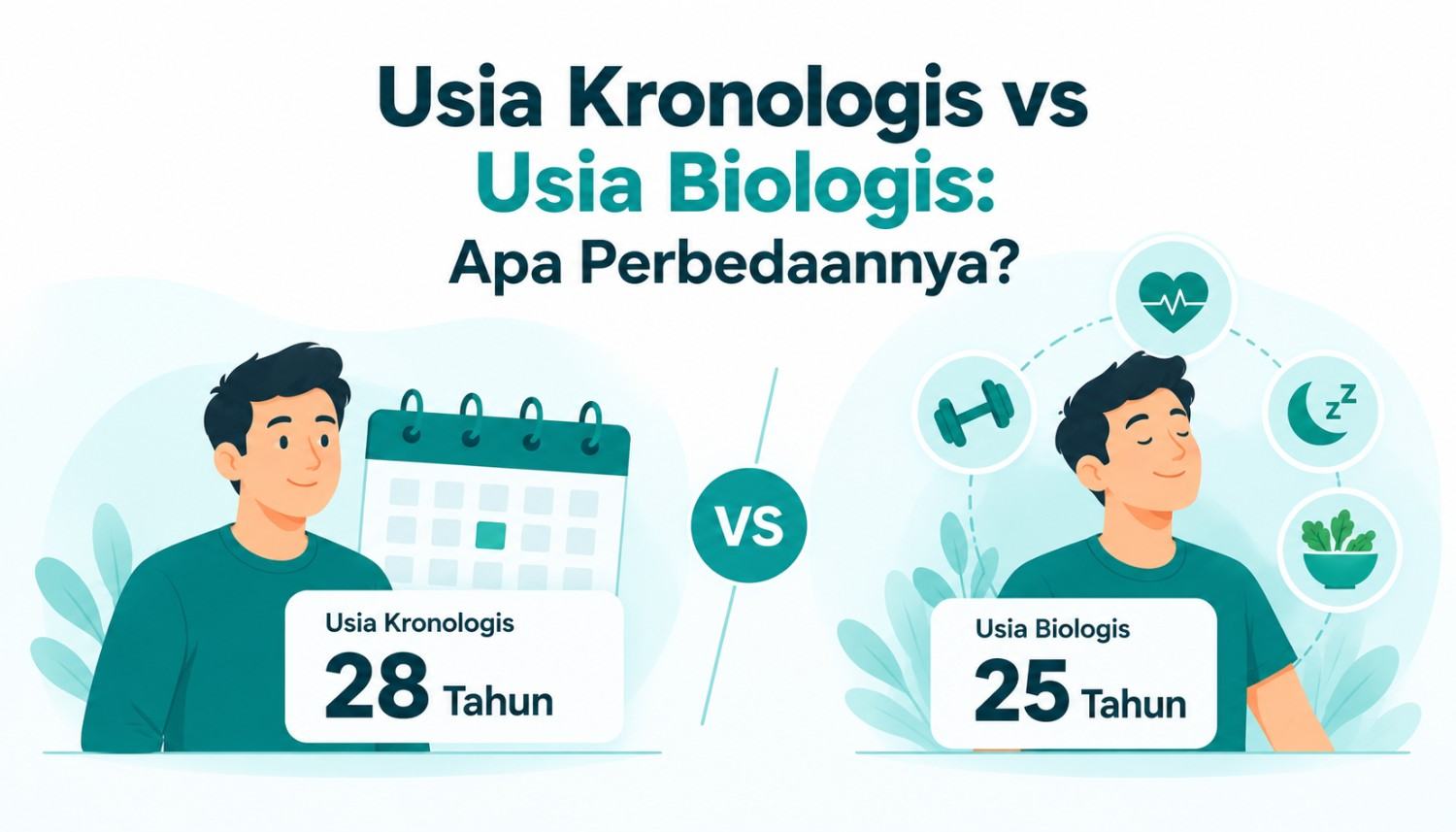
Age is often thought of simply as a number calculated from birth. However, there are actually several ways to describe a person's age. Two frequently used terms are chronological age and biological age.
Chronological age indicates how long a person has lived based on their date of birth. Meanwhile, biological age describes the condition or rate of aging of the body based on various biological and health factors.
Even if two people have the same chronological age, their physical condition may not be identical. This is why chronological age and biological age have different meanings and uses.
In this article, we will discuss the differences between chronological age and biological age, how they are determined, the factors that influence them, and simple examples to make them easier to understand.
What is Chronological Age?
Chronological age is a person's age calculated from the time from their birth date to a specific date. This is the most common type of age used in everyday life.
For example, a person who was born on May 10, 2000 and has passed his birthday in 2026 has a chronological age of 26 years.
Chronological age can be expressed in:
- Year
- Month
- Day
- Combination of year, month, and day
Because it's based solely on dates, chronological age is relatively easy to calculate. If you want to automatically find your age based on your birth date, you can use an online age calculator to calculate the difference in years, months, and days.
What is Biological Age?
Biological age is a concept used to describe the biological condition of the body compared to calendar age.
Unlike chronological age, which only requires a birth date, biological age doesn't have a simple calculation method that applies to everyone. Biological age assessment can involve various indicators, depending on the method used, for example:
- Condition of body systems
- Physical fitness
- Body composition
- Blood pressure
- Metabolism
- Condition of cells and tissues
- Certain biomarkers
Because the methods used can vary, the estimated biological age results from one method may not be the same as those from another. In other words, biological age should be understood as an estimate of the body's biological condition, not as a substitute for actual age based on birth date.
Difference between Chronological Age and Biological Age
The main difference between the two lies in what is measured. Chronological age measures how long a person has lived, while biological age attempts to describe how the body experiences the aging process.
Here's the comparison:
| Aspect | Chronological Age | Biological Age |
| Basis of assessment | Date of birth | Biological condition of the body |
| How to determine | Difference between date of birth and reference date | Based on certain biomarkers or indicators |
| Results | Year, month, and day | Estimation of biological aging rate |
| Easy to calculate yourself | Yes | Not always |
| Changing with the times | Yes | May change depending on body condition and assessment method |
| Used for administration | Generally yes | Generally no |
For a more comprehensive explanation of the concept, you can also read the article on the meaning of chronological age. The table shows that the two terms describe different things and should not be used interchangeably.
Examples of Chronological Age and Biological Age
For example, there are two people named Andi and Budi. They were both born in the same year and have a chronological age of 40.However, their physical conditions may be different.
Andi may have a regular pattern of physical activity, adequate sleep, and a number of different health indicators than Budi.
In a biological measurement method, their results may show different biological age estimates even though the chronological age is the same.
A simple example:
| Person | Chronological Age | Biological Age Estimation Example |
| Andi | 40 years | 36 years old |
| Budi | 40 years | 44 years old |
These figures are for illustrative purposes only. Actual biological age cannot be determined solely based on a person's lifestyle or appearance and requires specific assessment methods.
Why Does Chronological Age Always Increase?
Chronological age follows the passage of time. If someone is 30 years old today, one year after their next birthday, their chronological age will be 31.
The calculation is not affected by:
- Health conditions
- Weight
- Fitness level
- Appearance
- Daily habits
As long as the date of birth is known, chronological age can be calculated with certainty based on the date used as a reference.
Can Biological Age Be Different from Chronological Age?
Yes. Conceptually, biological age estimates can be lower, equal, or higher than chronological age.
For example, a person's chronological age may be 45 years, but a biological assessment method gives an estimate of 41. Conversely, certain methods may also produce estimates higher than chronological age.
However, results like these need to be viewed in the context of the methods used. There is no single, universal biological age figure that can describe a person's entire physical condition.
Factors That May Be Related to Biological Age
The body's aging process is influenced by many factors, including lifestyle, environment, genetics, and health conditions.
1. Genetics
Genetic factors can influence various biological processes in the body and how a person experiences changes as they age. However, genetics is not the only factor that determines the aging process.
2. Physical Activity
Physical activity is related to many aspects of health, including cardiovascular fitness, muscle strength, and body function.
A person's activity level may be one of the factors considered in some assessments of biological conditions.
3. Sleep Patterns
Sleep is a vital part of daily bodily functions. The duration and quality of sleep can be linked to various aspects of health and well-being.
4. Eating Patterns
Diet can influence weight, metabolism, and a number of health indicators. Therefore, diet can also be a factor related to overall body condition.
5. Smoking and Alcohol Consumption Habits
Certain habits can be linked to long-term health and the body's biological processes. The effects can vary between individuals based on frequency, duration, and other health factors.
6. Stres
Long-term stress can be related to various bodily functions and general health.
However, its influence cannot be converted into a biological age figure simply by assessing a person's stress level.
How to Calculate Chronological Age?
Calculating chronological age is much simpler than assessing biological age. You only need:
Date of birth + reference date
As an example:
Date of birth: July 15, 1995
Reference date: August 20, 2026
Since his birthday on July 15th has already passed, his chronological age is:
31 years old
If you want more details, the results can also be calculated in years, months and days.
How is Biological Age Measured?
There is no single formula like: current year – year of birth
to obtain biological age. Researchers and healthcare providers can use various approaches to study biological aging. Methods can consider a combination of indicators such as body function, laboratory data, or other biomarkers.
Some modern research also uses specific changes in DNA or molecular biomarkers to study the aging process. Because the approaches vary, the results of one method may not be the same as those of another.
Can Appearance Determine Biological Age?
No. Someone who looks younger or older than their age does not automatically have a specific biological age. Appearance can be influenced by many things, including:
- Genetics
- Skin conditions
- Hairstyle
- Sun exposure
- Life habits
Therefore, assessing biological age solely based on face or appearance does not provide a reliable measurement.
Chronological or Biological Age Used for Documents?
For most administrative purposes, chronological age.
For example:
- School registration
- Administration form
- Job registration
- Competition categories based on age
- Certain age requirements
- Official documents
This is because chronological age can be verified using the date of birth. Biological age is not typically used to determine a person's age administratively.
Can Two People of the Same Age Aging Differently?
Yes. Two people who are both 50 years old have the same chronological age, but their physical and biological conditions can be different.
These differences can be related to a variety of factors throughout life, from genetics to habits and environment.
This is one reason the concept of biological age is used in research on health and aging.
Which is More Accurate: Chronological Age or Biological Age?
The two don't measure the same thing, so it's not appropriate to compare them as to which is more accurate in general. Chronological age is appropriate for answering: How long has a person lived since birth?
Whereas biological age attempts to answer a different question: How does the body's biological condition compare to certain aging patterns?
If the goal is to determine a person's official age, chronological age is the relevant measure. If the goal is to study biological processes and the body's aging, a biological approach may provide different information.
Summary of Differences Between Chronological and Biological Age
The easiest way to remember the difference is: Chronological age = age based on time.
Biological age = estimate based on the biological condition of the body.
A person may have:
- Chronological age 35 years
- Estimated biological age under 35 years
- Estimated biological age is around 35 years
- Or estimated biological age above 35 years
While chronological age can be calculated precisely from the date of birth, biological age depends on the method and indicators used.
Frequently Asked Questions about Chronological Age vs. Biological Age
What is the difference between chronological and biological age?
Chronological age is calculated based on the time since the date of birth, while biological age is an estimate of the condition or level of aging of the body based on certain biological indicators.
Can biological age be younger than actual age?
Biological age estimates from certain methods may be lower than chronological age. However, the results depend on the measurement method and do not replace official age based on date of birth.
Can chronological age change?
Chronological age continues to increase with the passage of time and cannot decrease.
Can biological age change?
The indicators used in biological measurements can change over time. Therefore, biological age estimates can also differ when performed at different times or using different methods.
How to calculate chronological age?
Calculate the difference between your birth date and the reference date. For accurate results, pay attention to the year, month, and day.
Can biological age be known from date of birth?
No. Date of birth can only be used to calculate chronological age. Biological age requires additional biological information or measurements.
Conclusion
The main difference between chronological and biological age lies in the basis for assessment. Chronological age indicates how long a person has lived since their date of birth and can be measured precisely in years, months, and days.
Meanwhile, biological age is a concept used to describe the condition or level of biological aging of the body based on certain methods and indicators.
These two types of age serve different purposes. Chronological age is widely used in everyday life and administration, while biological age is more related to the study of body condition and the aging process.